How to make a family cookbook
The recipes that matter most are often only in someone's head. A family cookbook gets them on paper while you can still ask.
The short answer: ask each relative for one or two recipes and a photo by a set date, cook the vague ones together to pin down the amounts, add a line of story to each, and print a copy for every household. Start two months before you want to give it.
Collecting the recipes
- Make a list of the dishes the family can't do without: the holiday dishes, Sunday dinner, the birthday cake, the cookies.
- Ask each relative for one or two, with a deadline. A short message works better than a form: "Can you send me your potato salad recipe and a photo of you making it, by October 15?"
- Photograph handwritten recipe cards, even if you type them out. The handwriting is worth keeping.
- Interview the cooks who don't write things down. Ask them to cook while you watch and note everything.
From "a handful" to measurements
Grandma's recipes often say "flour until it feels right". To make them usable:
- Cook it with them. Before each handful goes in, put it in a measuring cup or on a scale.
- Write the oven temperature and time, and what "done" looks like ("golden on top, firm in the middle").
- Keep their words as a note under the recipe: "Grandma: the dough should feel like an earlobe."
- Test the recipe once from the written version before it goes in the book.
Stories and photos
A line or two per recipe turns a cookbook into a family history: who made it, when it was served, what went wrong the first time. Add a photo of the dish or, better, of the cook in the kitchen. Old photos of family dinners make good chapter openers.
Organizing the book
- By course (starters, mains, sides, desserts, baking), or by person ("Grandma Rose", "Uncle Joe"), or by holiday.
- One recipe per page, with ingredients one per line and the method one step per line.
- A contents page at the front, and a page for the family tree or a dedication.
Printing and binding
For a kitchen book, print at home and put the pages in a binder with sheet protectors: they wipe clean and you can add recipes later. For a gift, a copy shop can print and spiral-bind copies for every household. Half-letter size (5.5 × 8.5 inches) fits a small binder or recipe box album.
Ideas
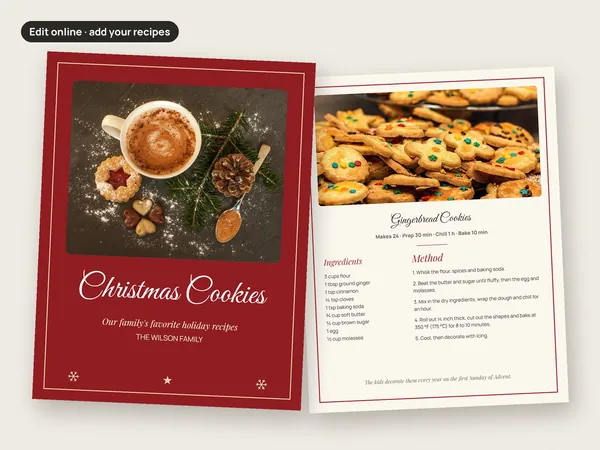
- Christmas: give everyone a copy, or start with a Christmas cookie book and a tin of cookies.
- A wedding or new home gift: the family classics the couple grew up with.
- A memorial cookbook of a loved one's recipes, for the whole family.
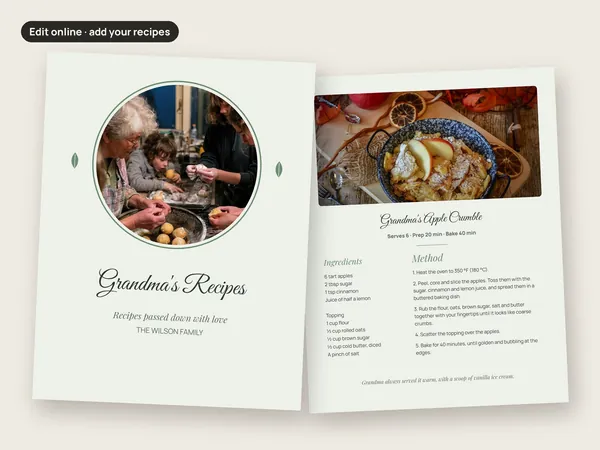
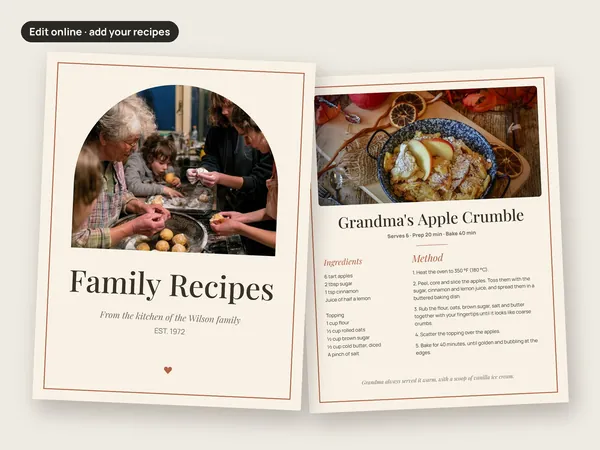
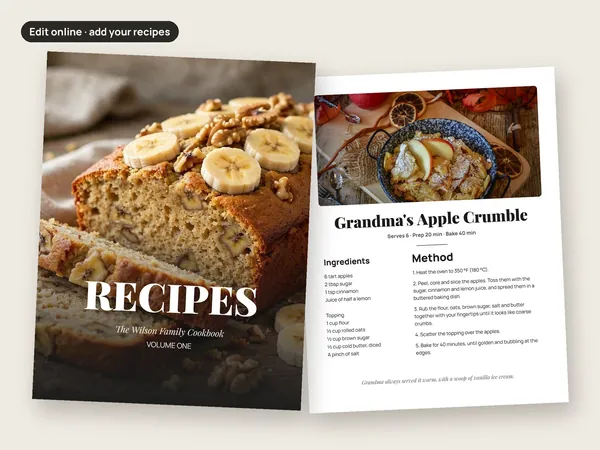
Our recipe book templates take up to 79 recipes, typed straight into the pages: Grandma's sage and script, cream and terracotta or modern with a big photo.