How to plan wedding seating: who sits where
Seating a wedding feels like a puzzle until you do it in the right order. Start with the fixed seats, group the rest, and leave the hard cases for last.
The short answer: wait for the final RSVPs, put every guest in a spreadsheet with a group (family, work, school friends), seat the couple and the parents first, then fill tables group by group. Put older guests away from the speakers, and give children a table near their parents.
Step by step
- Start after the RSVP deadline, about three weeks before the wedding. Seating people who don't come means doing it twice.
- Get the floor plan from the venue: how many tables, how many seats each, where the dance floor, the bar and the speakers are.
- Make a spreadsheet: one row per guest, with columns for side (bride, groom, both), group, and notes (wheelchair, high chair, "not next to Uncle Bob").
- Seat the fixed tables first: the couple, then the parents and grandparents.
- Fill tables by group: college friends together, colleagues together, cousins together.
- Mix the leftovers with people they'll get on with: similar ages or interests.
- Read it back table by table with your partner and one parent from each side.
The head table or sweetheart table
- Head table: the couple with the wedding party, facing the room. Partners of the wedding party can sit at a nearby table, or with them if there's room.
- Sweetheart table: just the two of you. It frees the wedding party to sit with their partners and makes the rest easier.
Parents and grandparents
Traditionally each set of parents hosts a table near the couple, with grandparents and the officiant. Grandparents and anyone who uses a walker should be close to the doors and restrooms, and away from the speakers.
Divorced parents who don't get along: give each their own table, equally close to the couple. Nobody should feel ranked.
The hard cases
- Children: a kids' table near their parents works from about age 6; younger children sit with their parents.
- Singles: seat them with people they know, not at a "singles table".
- Guests who know only one person: seat them beside that person, with a friendly couple across the table.
- Plus-ones: always next to their partner.
- Vendors (photographer, planner): a small table near the back, if your contract includes a meal.
Tables or A to Z on the chart?
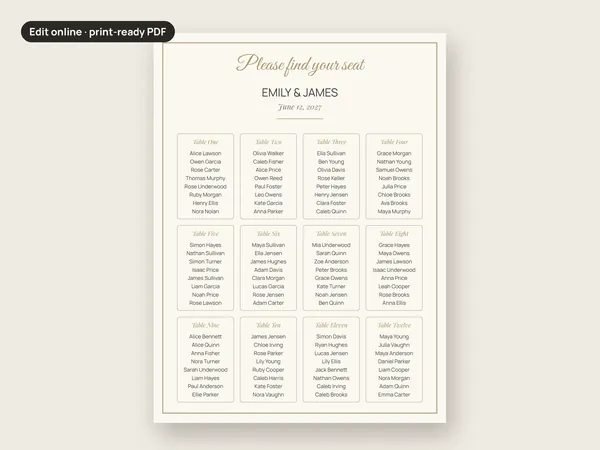
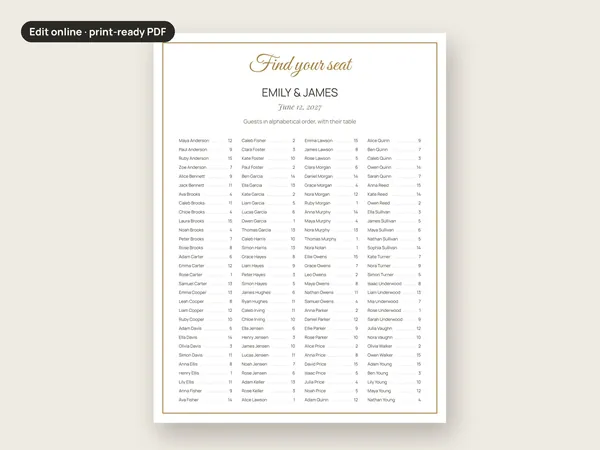
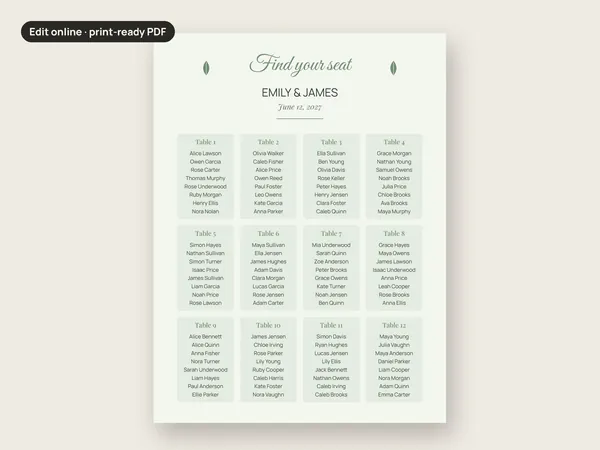
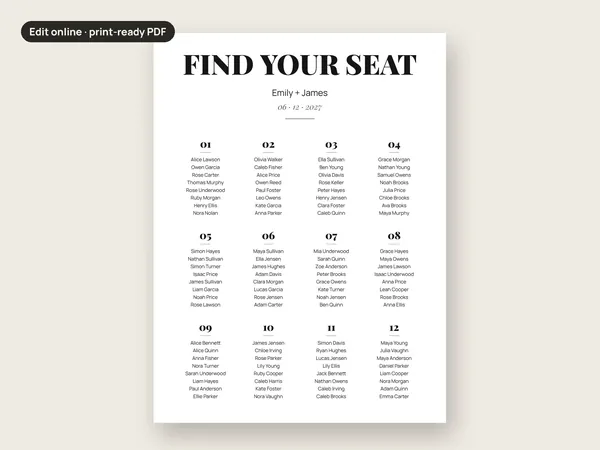
A chart grouped by table looks lovely and suits up to about 120 guests. For bigger weddings, an alphabetical chart is faster: guests find their surname and see their table number, so the line at the door moves.
Write couples and families on one line ("Mark & Susan Carter") to keep the list short, and name tables if you like: by number, or after places you've been together.
Making the chart
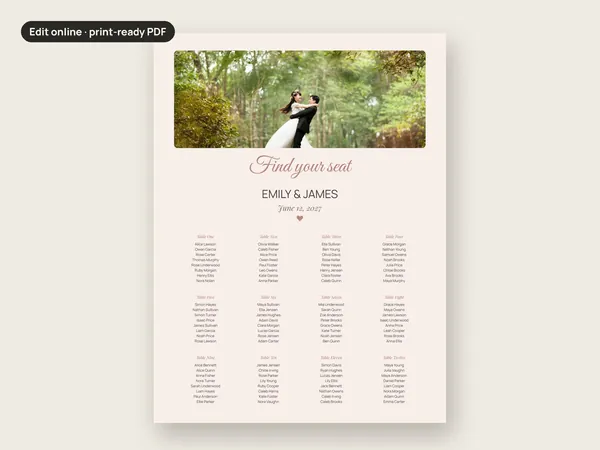
Copy each table's names from your spreadsheet and paste them into the chart, one guest per line. Our seating charts take 4 to 30 tables and print from 16 × 20 to 36 × 24 inches; download a free preview to check every name before you buy. Put the chart on an easel at the entrance to the reception, at eye level, with a light if the room is dark. The wedding program wording guide covers the ceremony side.